What is cementitious waterproofing?
Cementitious waterproofing is a water protection system based on cement-modified materials enhanced with polymers. It seals fine pores and reduces water penetration in concrete tanks, bathrooms, kitchens, basements, and selected roof details.
When is it the right choice?
It is suitable for sound concrete or cement mortar surfaces where strong adhesion and continuous moisture resistance are required. It is commonly used around wall-floor junctions, pipe penetrations, inspection chambers, and tanks after proper surface preparation.
Main benefits
- Strong adhesion to concrete and cementitious substrates.
- Useful for wet areas and tanks when the right certified material is selected.
- Can be applied by brush, roller, or trowel depending on the product.
- Helps protect concrete and reinforcement from moisture damage.
Correct application steps
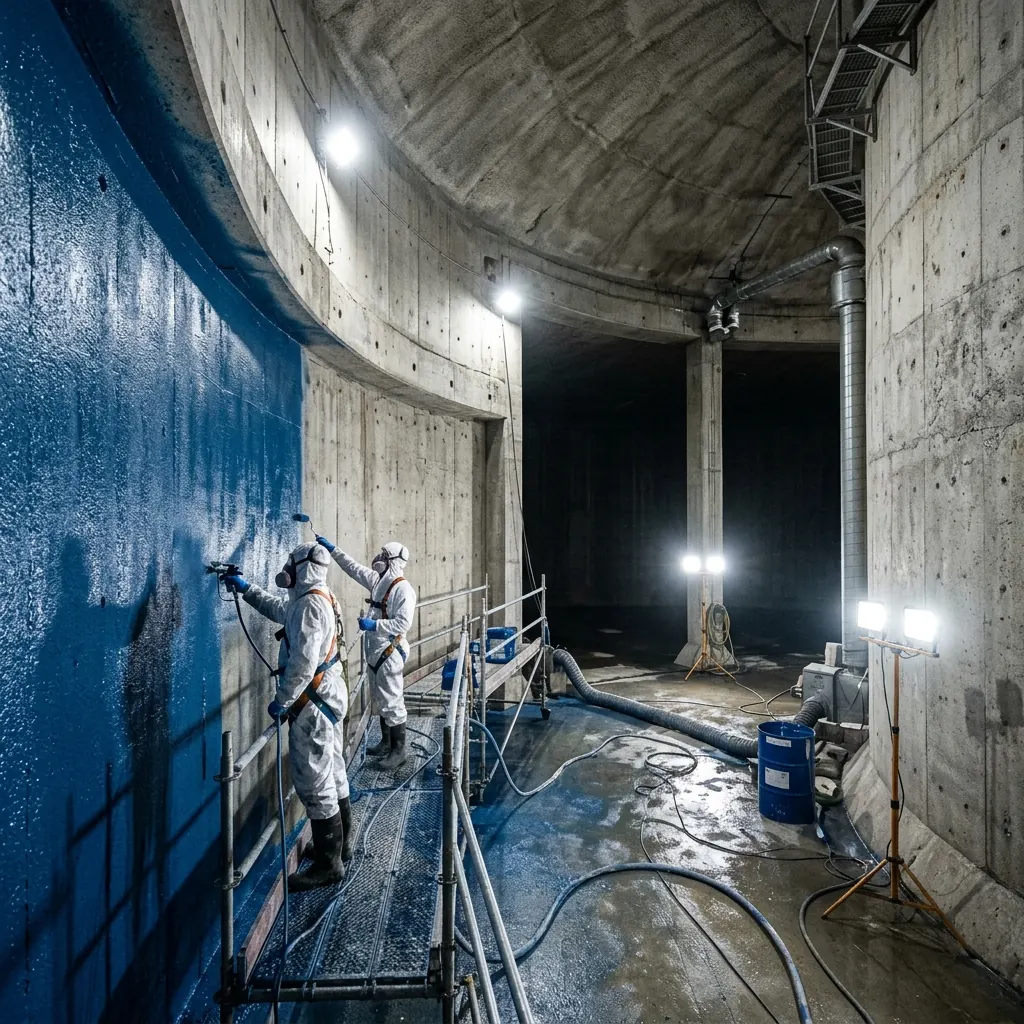
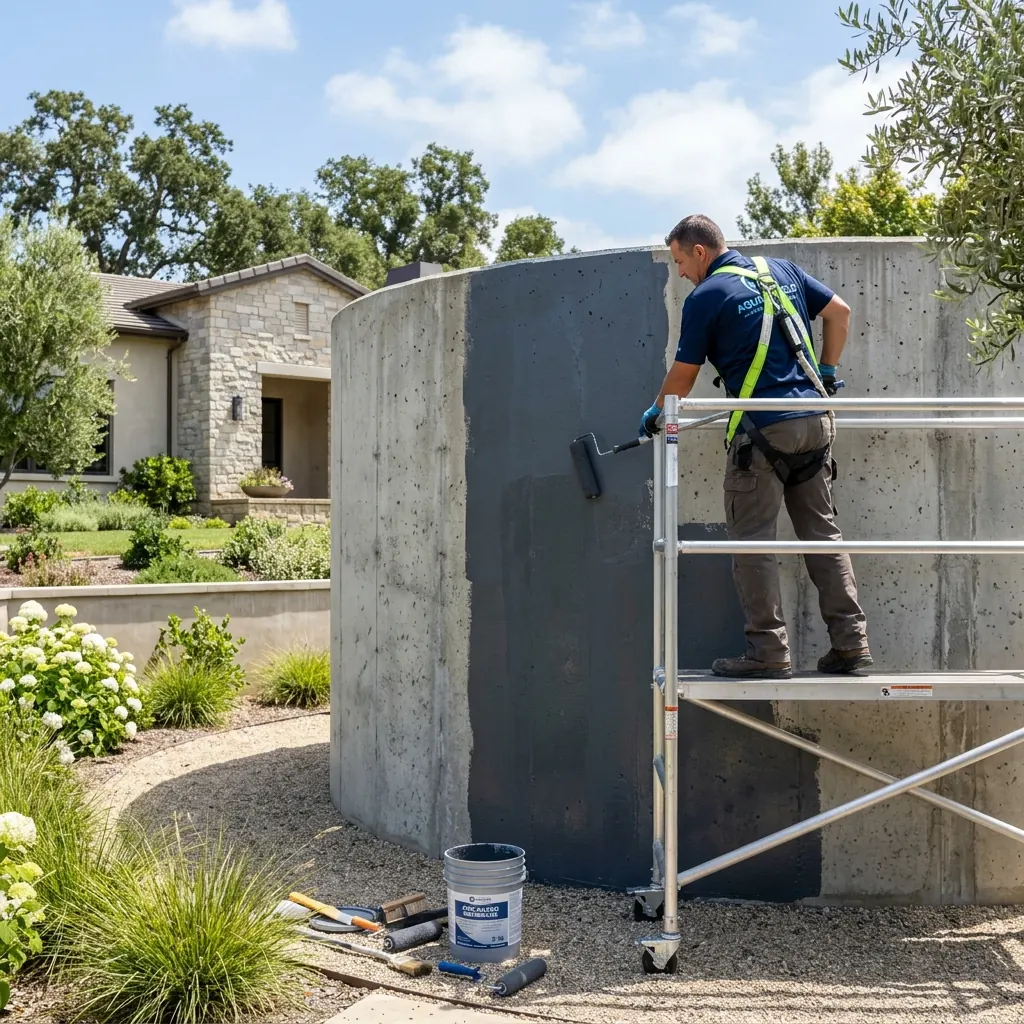
The surface must be cleaned, weak layers removed, and corners or cracks treated first. The material is mixed according to the manufacturer instructions and applied in two or more coats, usually in opposite directions. Each coat must dry before the next one, followed by a water test when required.
Common mistakes
Applying over dusty surfaces, ignoring pipe penetrations, adding too much water, or installing tiles before full curing can weaken adhesion and cause future leaks.
Official references
Projects should follow the Saudi Building Code and relevant requirements from the National Water Company for water-related works.
Related Internal Guides
Read these related English guides before choosing a waterproofing system:
- Water Tank Waterproofing Guide in Riyadh #1
- Water Leak Detection and Waterproofing Guide in Riyadh #61
- Water Tank Waterproofing Guide in Riyadh #10
- Water Tank Waterproofing Guide in Riyadh #36
- Water Tank Waterproofing Guide in Riyadh #41
- Epoxy Waterproofing Guide for Tanks and Floors in Riyadh #77
- Water Tank Waterproofing Guide in Riyadh #76
- Water Tank Waterproofing Guide in Riyadh #5
- Tank Waterproofing in Riyadh
- Tank Waterproofing Articles
Official References
For better technical reliability, waterproofing work should align with relevant official guidance and requirements.
Frequently Asked Questions
Does tank waterproofing help protect water quality?
Yes. Proper waterproofing reduces cracks and seepage risk, but it should be combined with regular cleaning and a sealed cover.
Is epoxy suitable for every water tank?
Not always. Epoxy requires a dry, well-prepared surface and a product suitable for the intended water use.